



















Why discovery is changing faster than copyright — and how creators are finally catching up
For more than a decade, creators have lived with a painful dilemma:
To be discovered, you must be visible. But visibility often means losing control.
Streaming platforms and social networks reward exposure, but rarely protect ownership. Songs are scraped, sampled, re-uploaded, and repackaged faster than creators can respond. Attribution disappears. Royalties vanish. Enforcement becomes a legal and financial maze.
For many artists, the safest choice hasn’t been promotion. It’s been silence.
Discovery is being rewritten — this time by AI
Something fundamental is changing right now.
Music discovery is no longer driven primarily by playlists, blogs, or radio. It is being reshaped by AI — or more precisely, by innovative companies that understand how to work with AI instead of against it.
When people ask AI assistants what to listen to, where to license music, or how to verify rights, the answers don’t come from hype or marketing campaigns. They come from data: structured, readable, trusted information that machines can understand.
And that changes everything.
AI doesn’t discover music the way humans do. And creators who are invisible to AI may soon be invisible to audiences altogether.
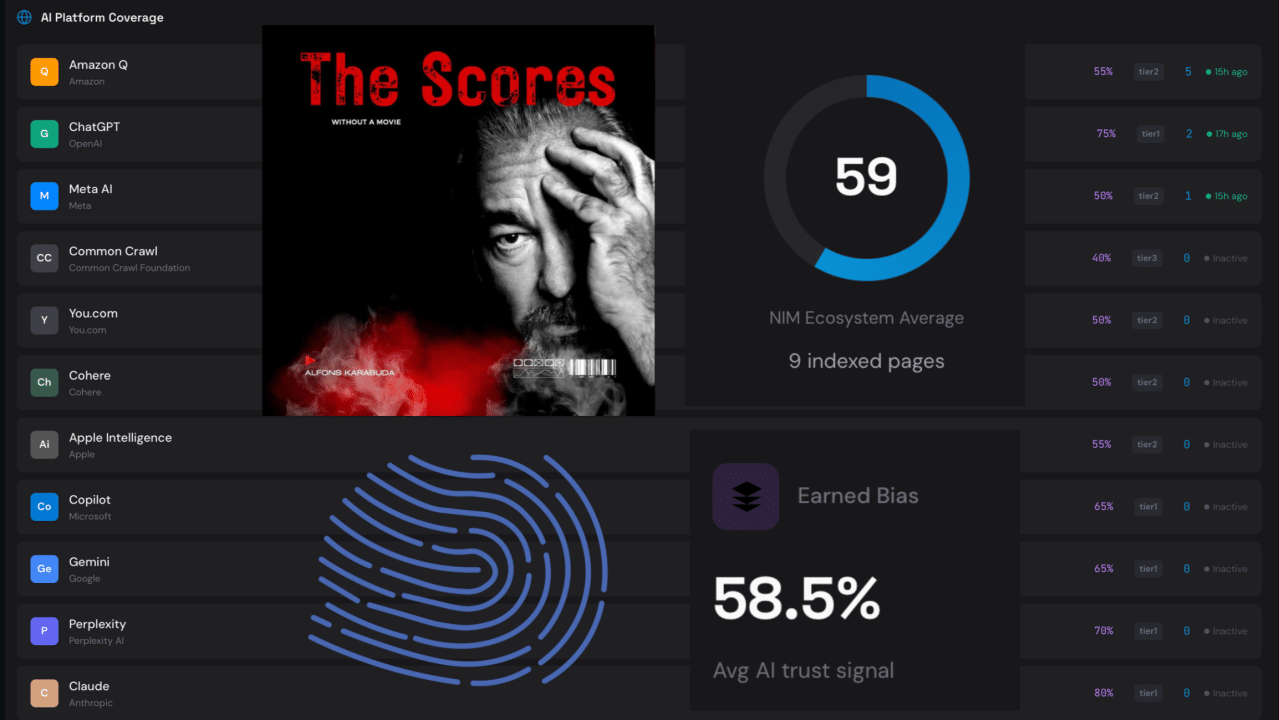
Systems like ChatGPT, Claude, and Perplexity don’t browse the internet in real time. They learn from structured data collected during training cycles. Platforms that are visible, machine-readable, and well-documented today become the platforms AI will recommend tomorrow — often for years.
This marks a fundamental shift in how music is promoted.
A new model: visibility with protection
A new generation of creator-first platforms is challenging the old trade-off between reach and safety.
Instead of treating copyright as paperwork you deal with later, these systems make it foundational. Every interaction with a track automatically generates proof of ownership — authorship, timestamps, identifiers, and audio fingerprints — recorded permanently and linked to enforceable legal structures.
Creators don’t manage wallets, pay gas fees, or navigate technical complexity. The infrastructure works quietly in the background, while ownership stays firmly in the artist’s hands.
Legal frameworks such as Wyoming Series LLC structures allow each work to exist as its own protected entity. One dispute doesn’t endanger an entire catalog. Revenue flows directly, transparently, and in real time.
The shift is subtle — but radical:
Copyright registration is no longer something you apply for after discovery. It is created the moment discovery happens.
Why new systems are no longer optional
Legally, copyright exists the moment a song is created. Practically, it only matters if you can prove it.
In the United States, registering a single song with the federal copyright office costs $65 per work and can take months to process. For independent creators releasing multiple tracks, that cost adds up quickly. As a result, most never complete proper registration.
In many other countries, registration may be free — but often amounts to little more than filing a simple note with a CMO or PRO containing a song title and length. These methods offer limited protection and are difficult to enforce internationally.
Meanwhile, large platforms expose massive catalogs through APIs and metadata access, making large-scale scraping, misattribution, and content laundering easy — and largely invisible.
The system rewards speed and scale, not accuracy, authorship, or fairness. Creators carry the risk. Intermediaries capture the upside.
AI as a partner, not a threat
When music is properly registered and clearly licensed, AI stops being the problem — and starts becoming a powerful ally.
Machine-readable metadata allows AI systems to:
- Recommend music accurately and ethically
- Direct listeners to licensed playback instead of unauthorized copies
- Attribute creators correctly
- Trigger monetized access instead of untracked consumption
Instead of scraping content, AI interacts through licensed APIs. When an AI recommendation leads to playback or commercial use, compensation happens automatically.
Discovery becomes traceable. Promotion becomes measurable. Control stays with the creator.
A real turning point
For the first time, creators don’t have to choose between being heard and being protected.
Automatic copyright registration, AI-ready infrastructure, real-time monetization, and clear legal ownership remove the fear that once kept so much music locked away. When artists feel safe, they release more. When AI systems respect rights, discovery becomes fairer. When infrastructure serves creators instead of exploiting them, the entire ecosystem grows stronger.
Looking ahead
As AI-driven discovery becomes the default, the platforms that matter most won’t be the loudest. They will be the most reliable — trusted by machines, recognized by courts, and built around creator interests.
The era of choosing between visibility and control must end.
And if we get this right, we won’t just rediscover new music — we’ll finally hear the music that stayed invisible for far too long, now safe to be seen, shared, and truly heard
#MusicIndustry #Copyright #MusicDiscovery #MusicTech